Product Design | Web Design | Case Study
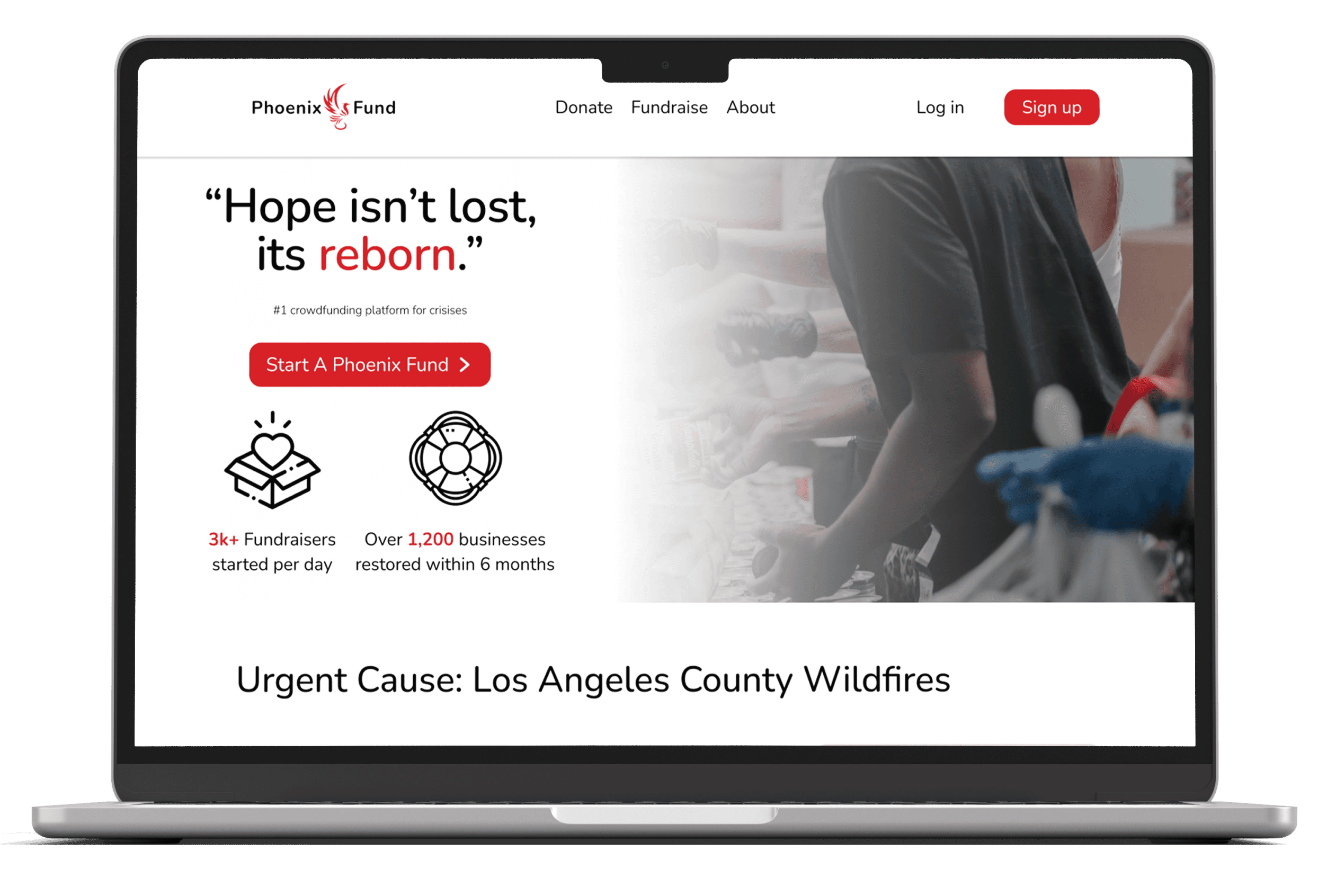
Designing a crisis-focused crowdfunding platform designed to help small businesses recover from disasters like the LA Fires.
Timeline
Feb - Mar 2025
Role
UX Designer
UX Researcher
Tools
Figma
Skills
User Research
UX Design
Product Strategy
User Stories
The Problem
In the aftermath of crises such as the recent LA wildfires, small businesses face financial devastation, struggling to rebuild without immediate access to funding. Existing crowdfunding platforms are often generalized and not tailored to the unique needs of small businesses affected by disasters. There is a need for a dedicated, crisis-focused crowdfunding solution that enables small businesses to recover quickly and effectively.

Nearly 1,900 small businesses hurt from
Los Angeles Wildfires
via Los Angeles Times

HOW MIGHT WE design an intuitive and engaging platform that makes it easy for small businesses to share their stories and for donors to contribute, so small businesses affected by crises are provided with rapid financial support?
Understanding The User
To better understand how small business owners and donors interact with crowdfunding platforms in times of crisis, I conducted user research focusing on their needs, motivations, and pain points. My process involves 4 key steps: brainstorming Empathy Maps, creating Personas, writing User Stories, and drawing User Journey Maps. Each step provides a unique insight to the user’s experience and allows us to empathize. By following this structured approach, I ensure that Phoenix Fund is designed with a deep understanding of its users, making it more intuitive, effective, and impactful for businesses in crisis.

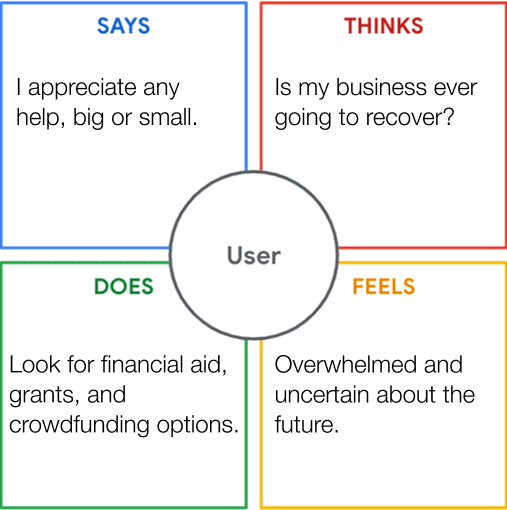
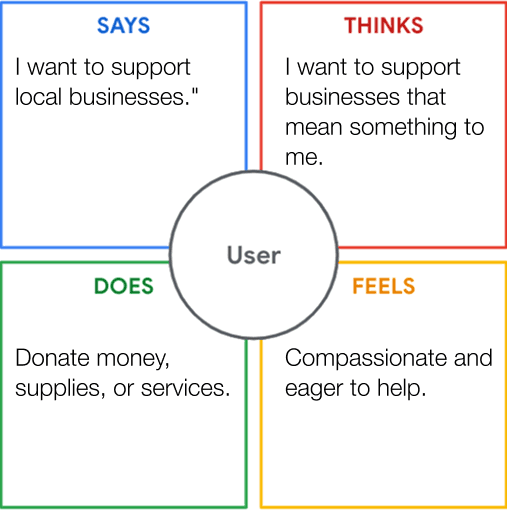
Empathy Maps
To gain deeper insight into users’ thoughts, feelings, and pain points, allowing for a more human-centered design approach.
User Type 1:
Small Business Owner
User Type 2:
Donating User
User Personas
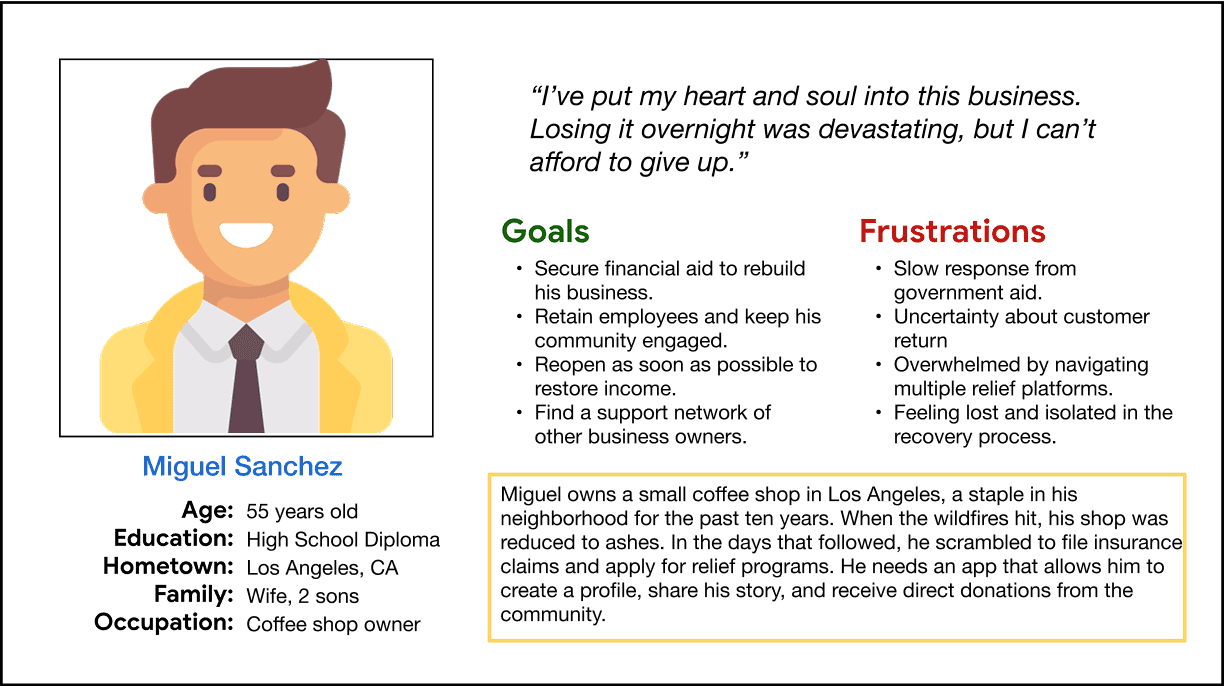
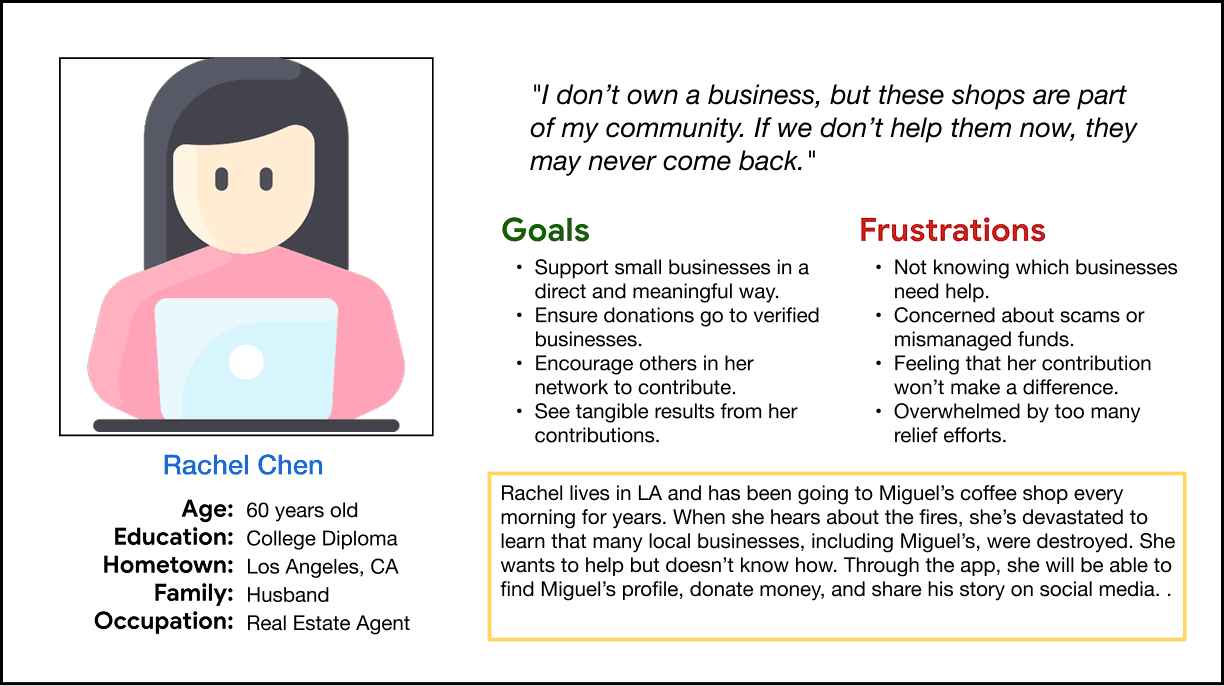
To create representative user profiles that capture the behaviors, motivations, and frustrations of real users.
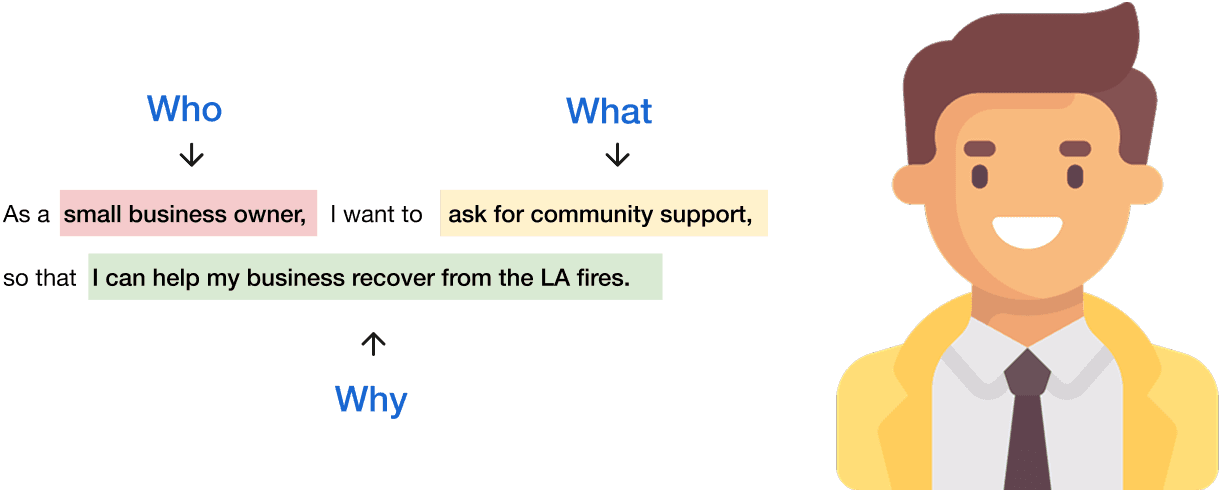
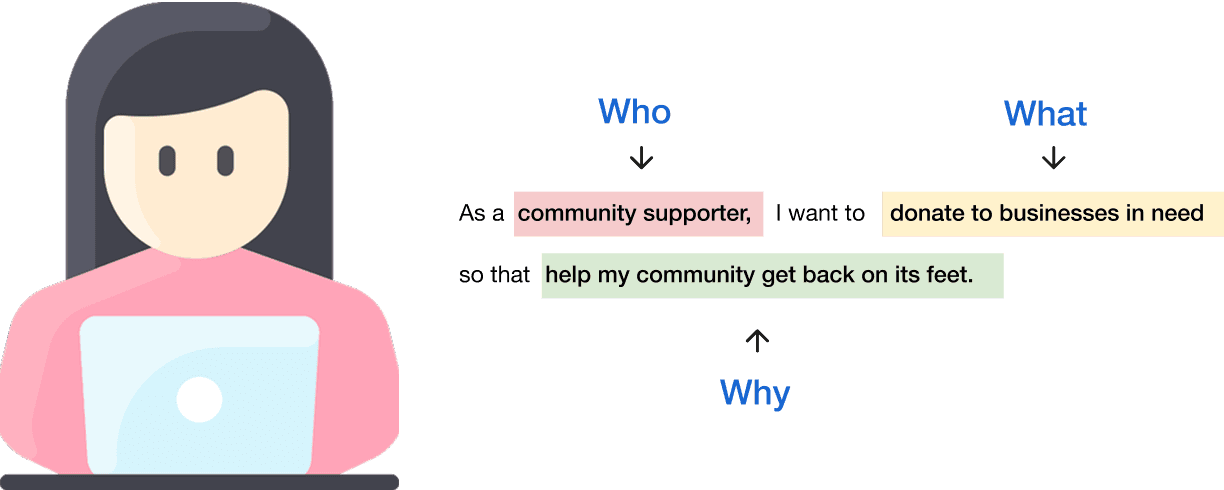
User Stories
To define specific scenarios that illustrate how different users interact with the platform, ensuring their needs are met through clear and actionable design decisions.

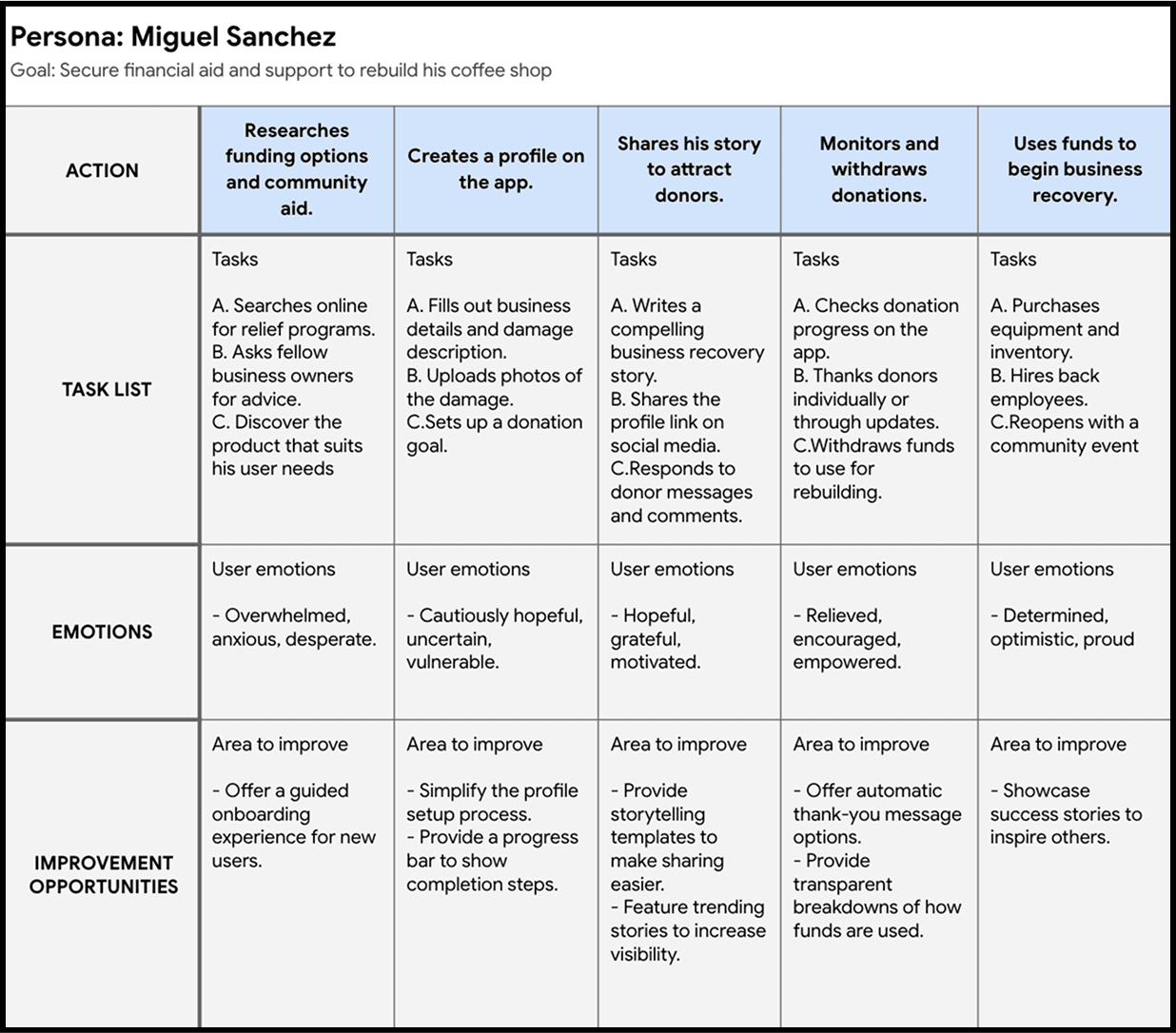
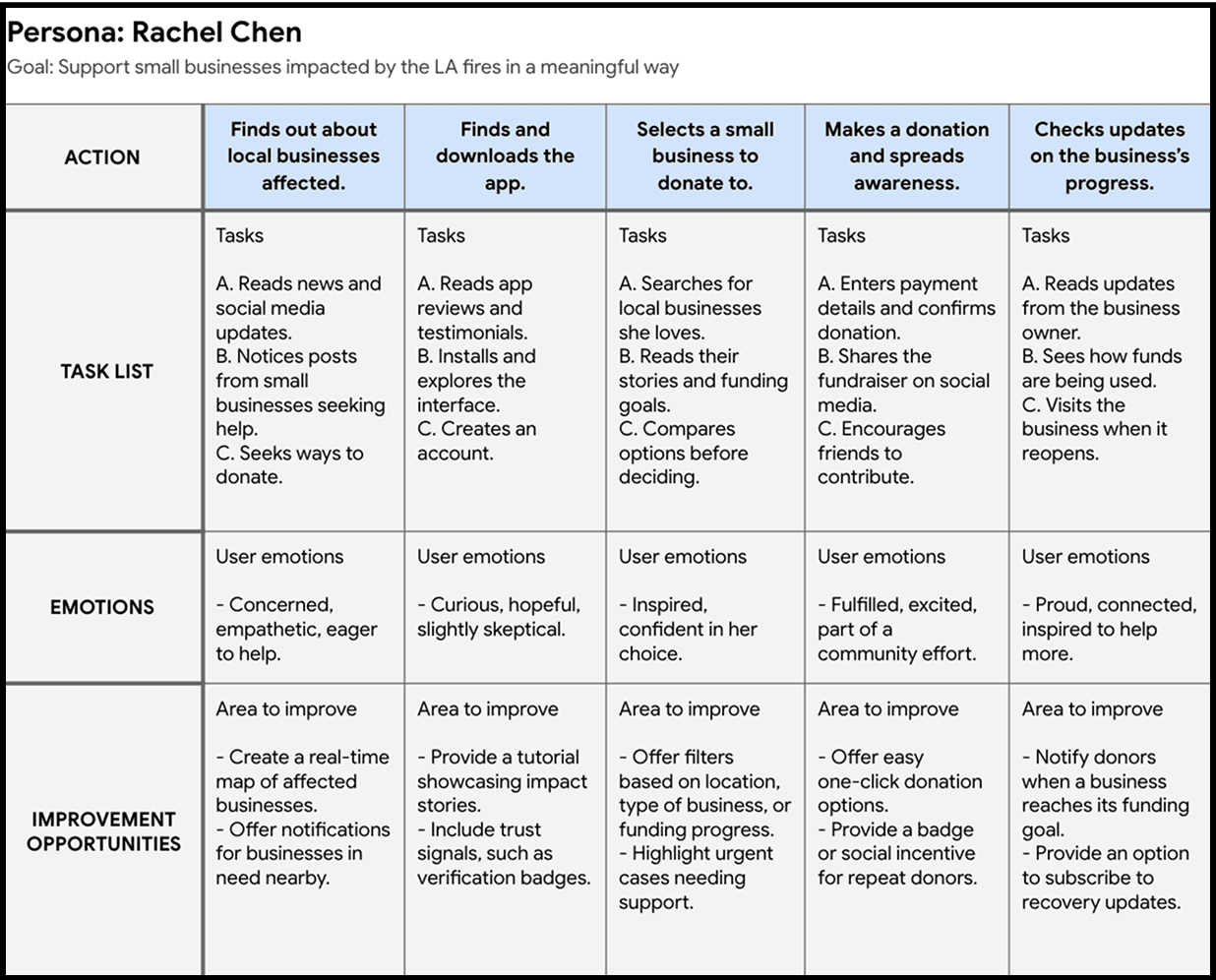
User Journey Maps
To visualize the steps users take while using the platform, highlighting obstacles and opportunities for improvement.
Goals
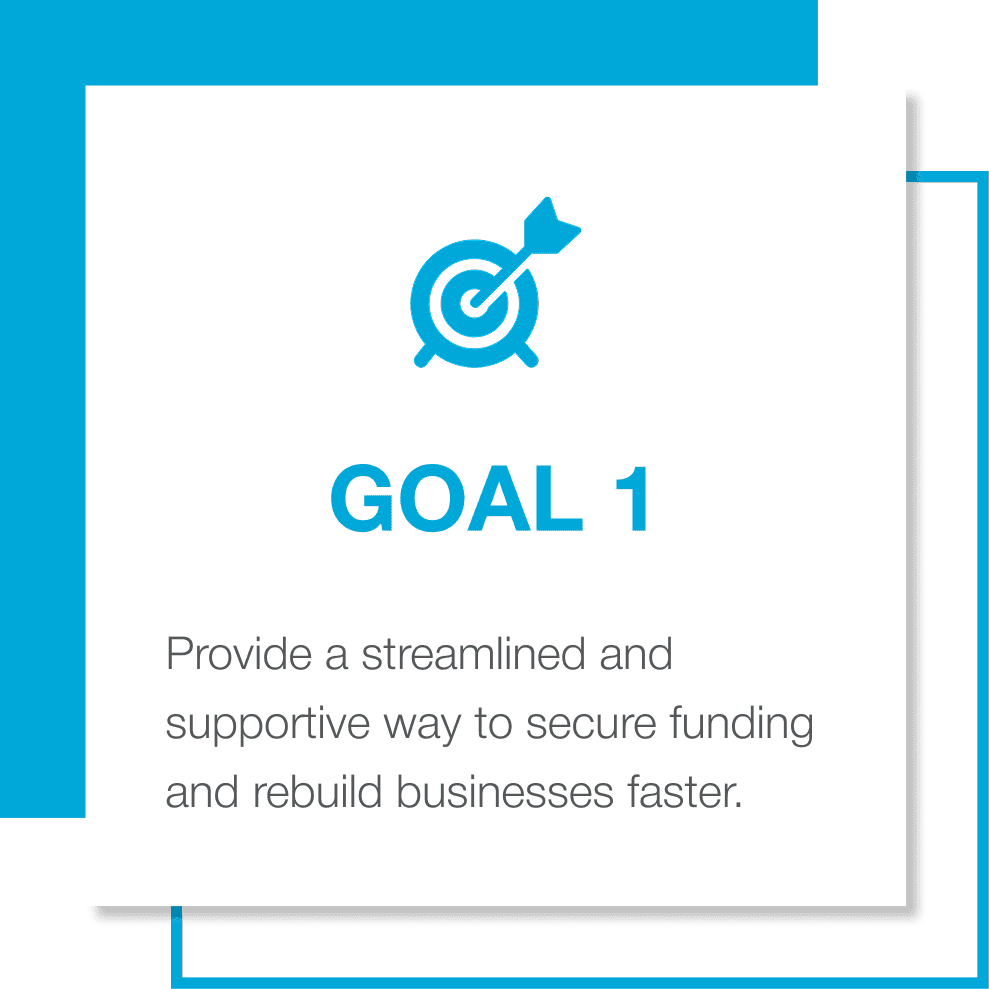
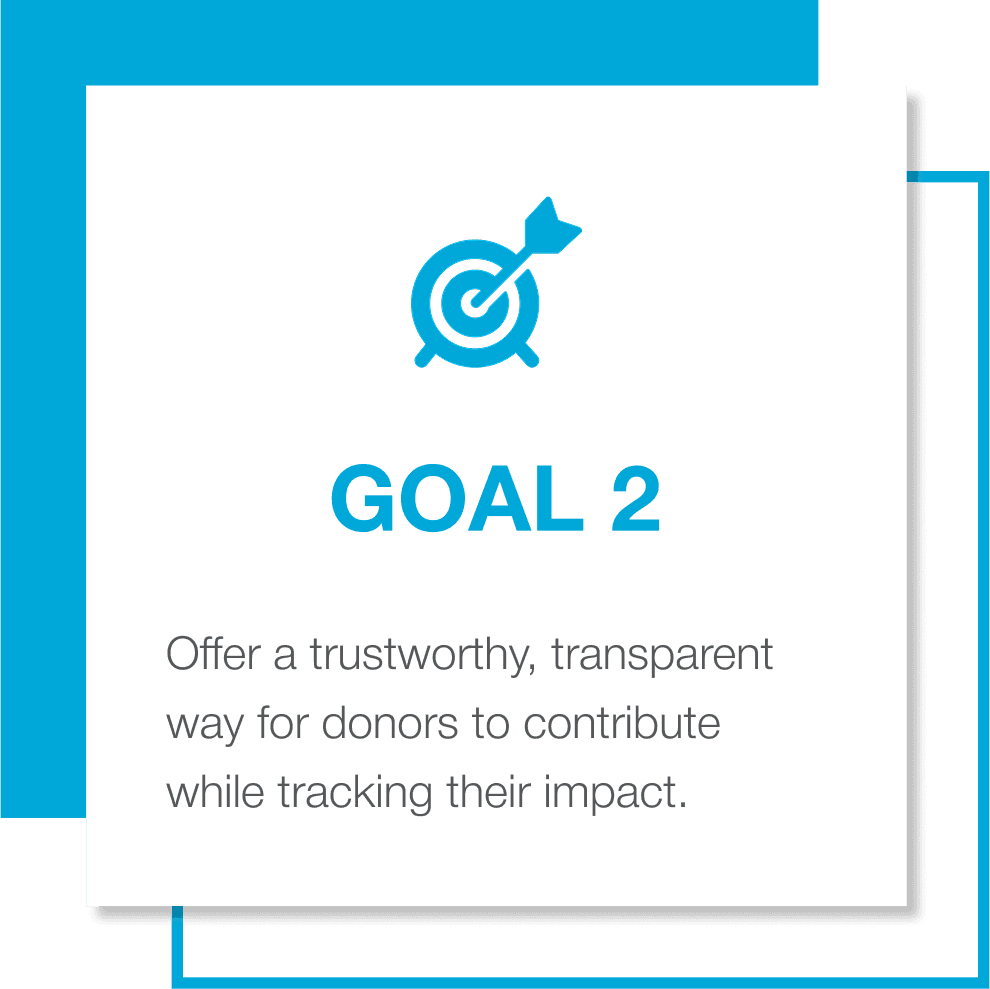
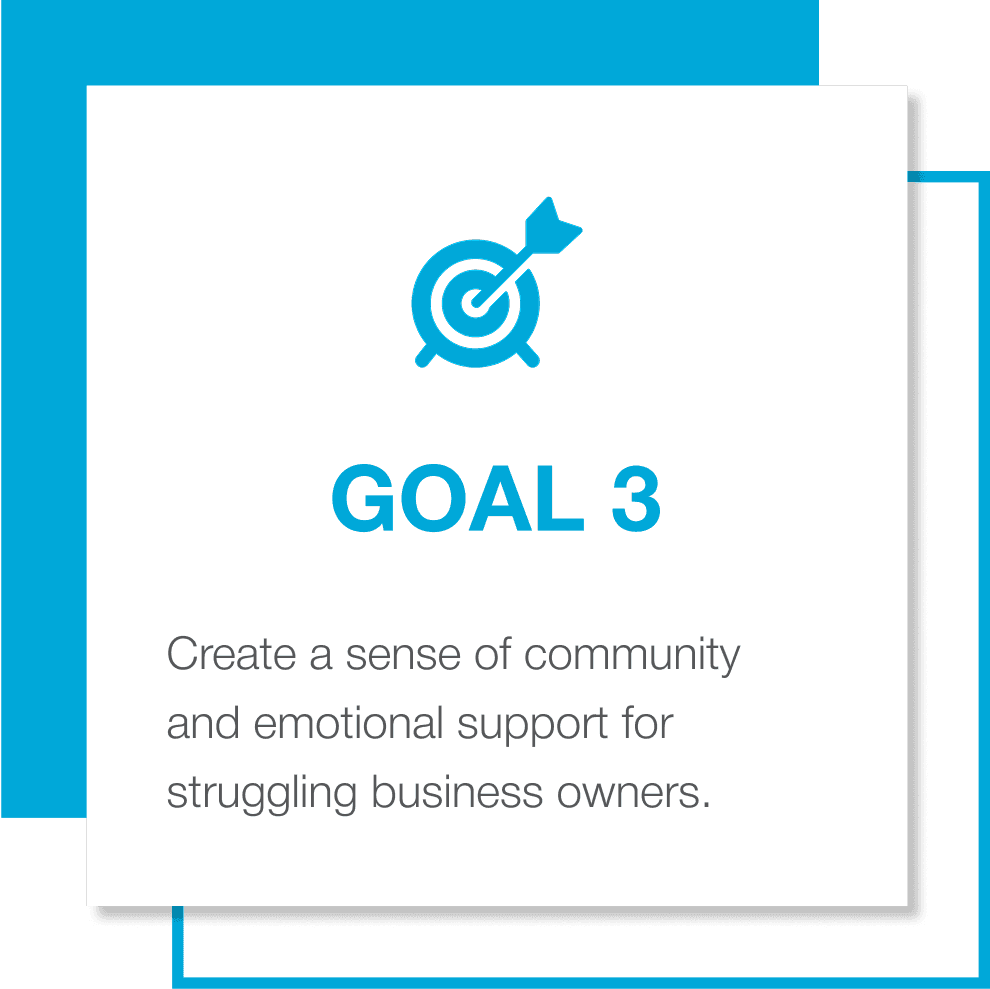
At its core, Phoenix Fund aims to bridge the gap between small businesses in crisis and the communities that want to support them. The platform is designed to not only provide immediate financial relief but also foster long-term recovery by ensuring a seamless, trustworthy, and impactful donation process. Now that we have completed our initial user research, I determined 3 goals for the project that meet both user and product needs.

Sitemap
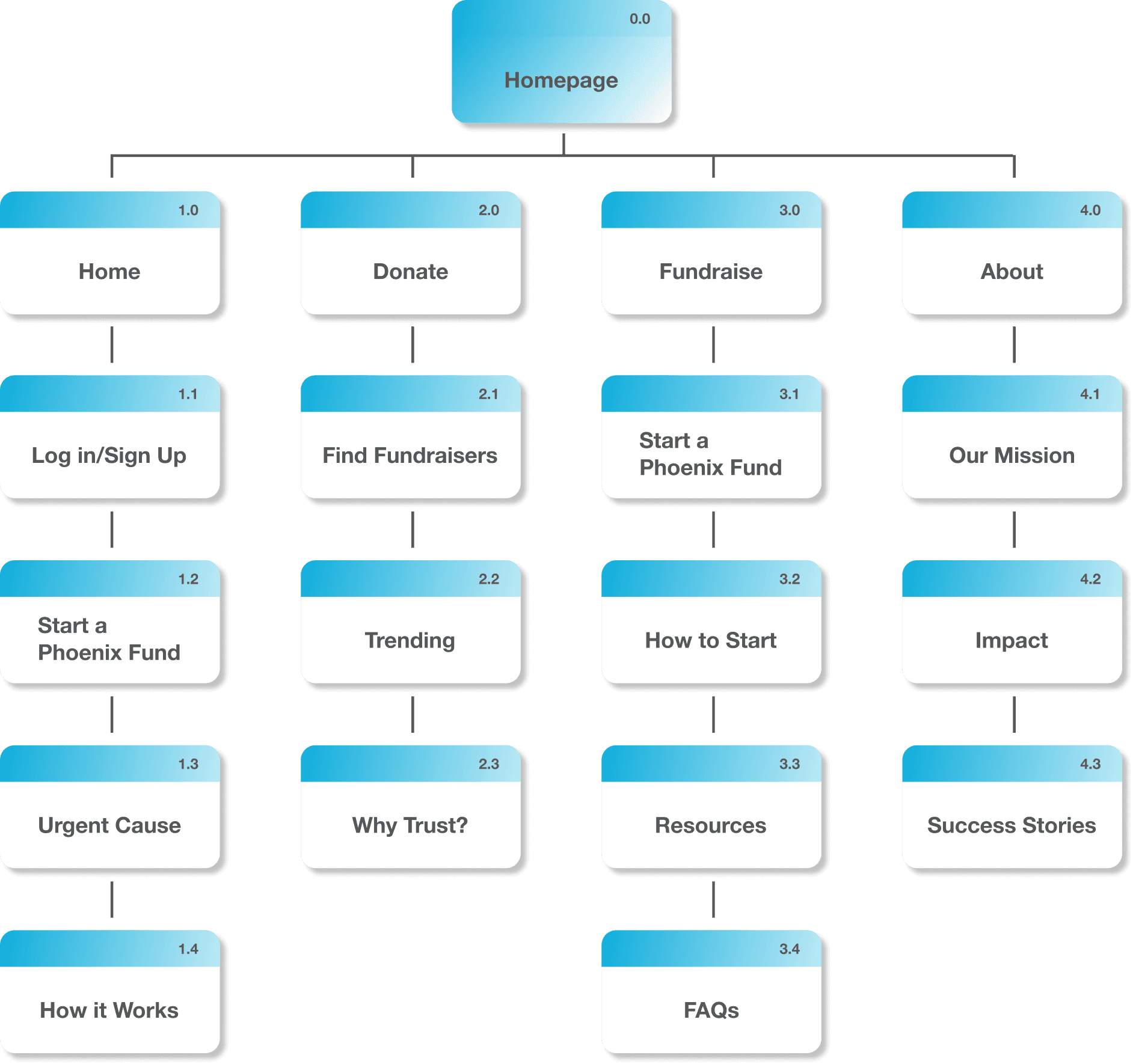
Home
Donate
Helps users discover and contribute to fundraisers by browsing active and trending campaigns.
Fundraise
Guides users through starting a fundraiser and offers resources on best practices for launching a successful campaign.
About
Shares Phoenix Fund’s mission and commitment to helping small businesses recover from crises.
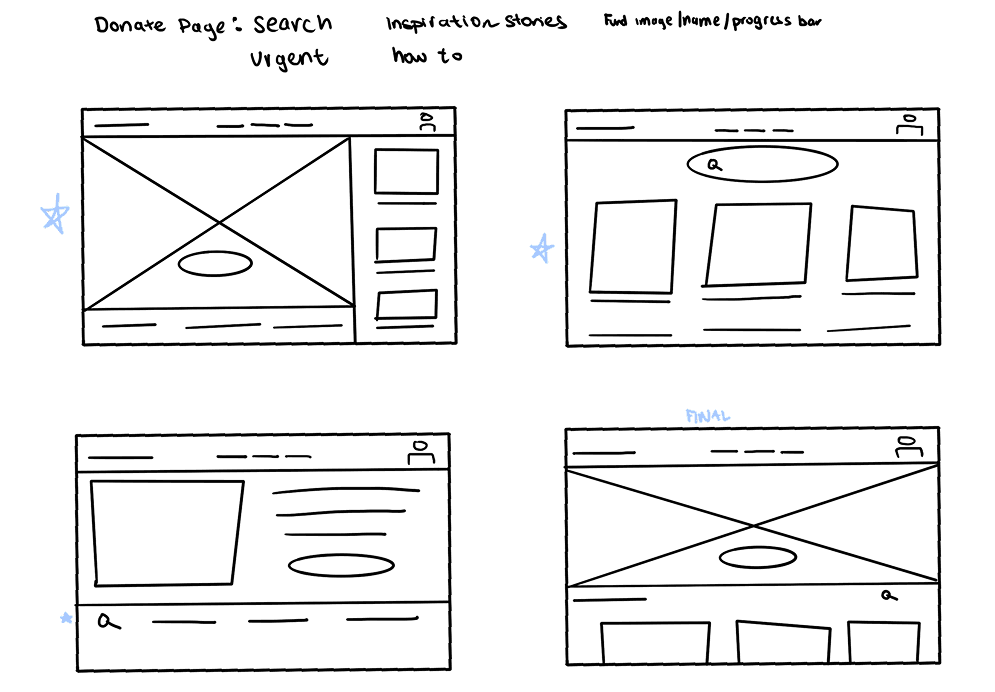
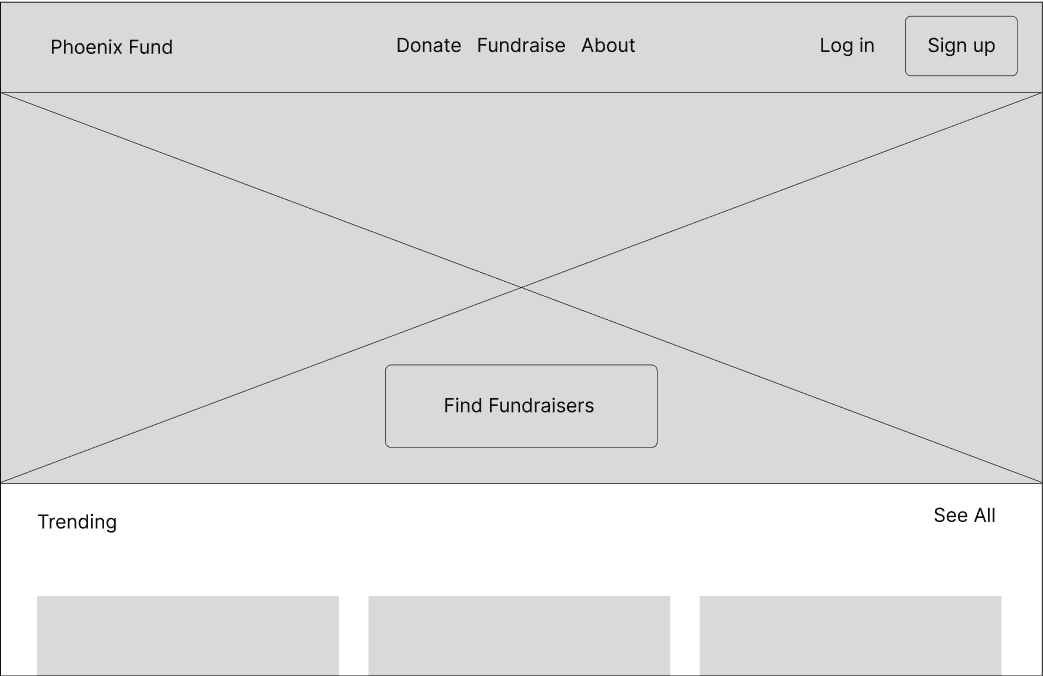
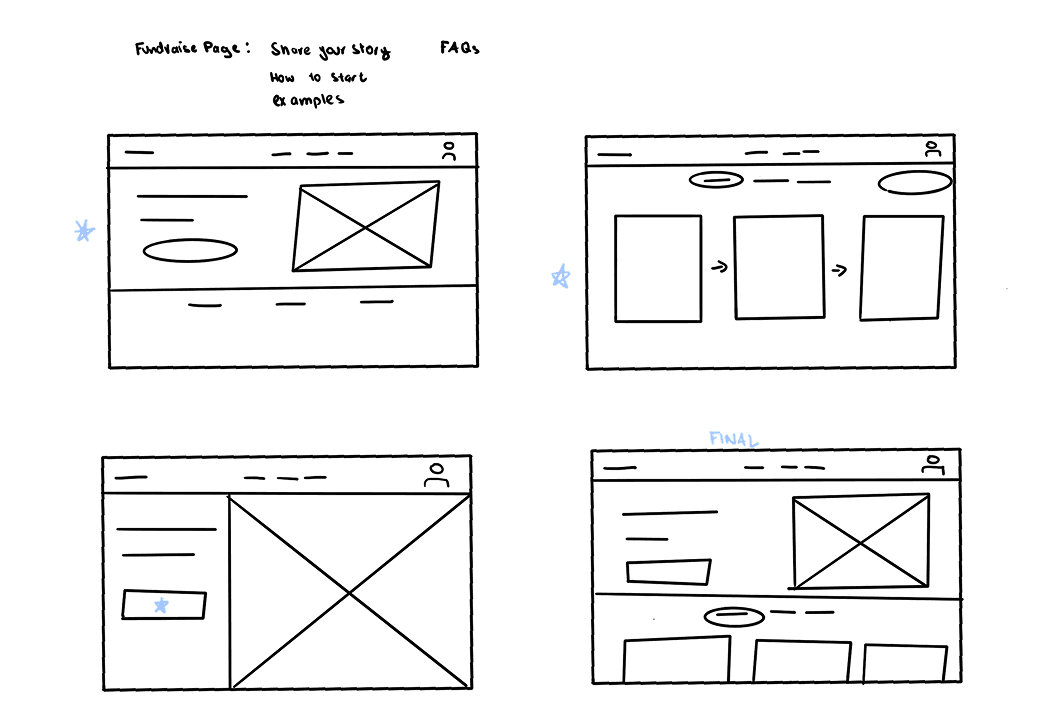
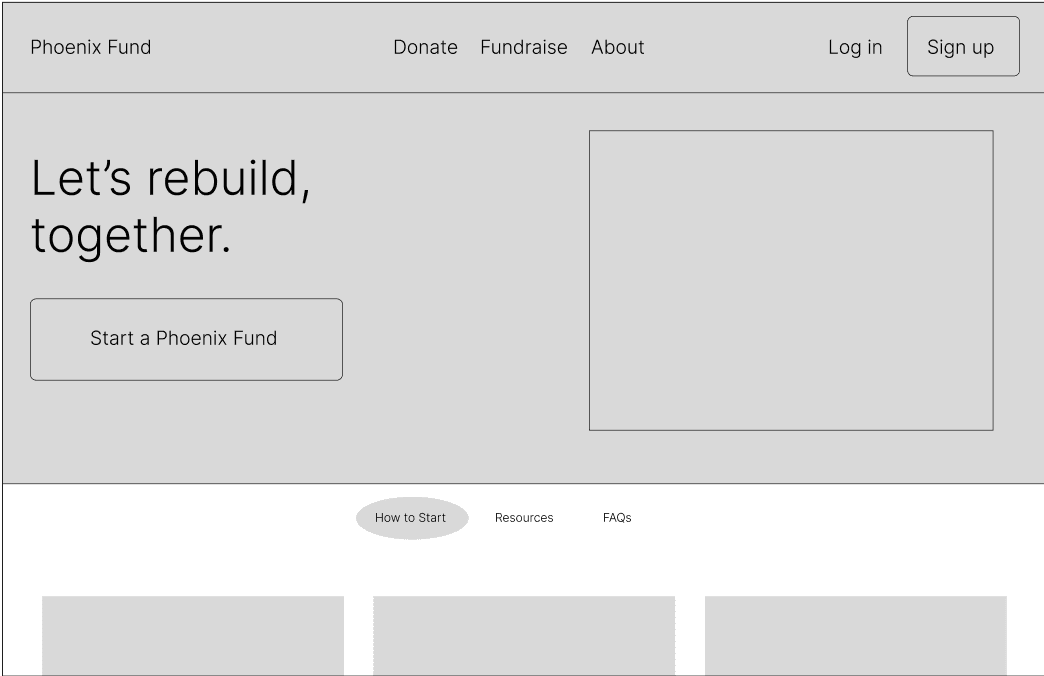
To bring my ideas to life, I started with hand-drawn wireframes, sketching multiple iterations to explore different layouts. For each iteration, I selected the most effective elements and combined them into a final paper prototype. With a clear direction, I translated my refined sketches into digital wireframes, ensuring consistency and usability. This iterative process helped me validate key design decisions, setting a strong foundation for high-fidelity prototypes.
Lo-Fi Prototype
The low-fidelity prototype served as an early, interactive version of the design, allowing me to test core functionality without getting caught up in visual details. Using simple shapes and minimal styling, I focused on defining the user flow and overall structure.

With this prototype in place, we will conduct a usability study to evaluate how effectively users can navigate the flow and complete key tasks. Insights from this testing phase will guide refinements, ensuring a smooth user experience before moving forward with designs.
Usability Study
Study Type
Location
Participants
Length
20 minutes
The usability study revealed key insights into how users interact with Phoenix Fund, highlighting both strengths and areas for improvement. Through participant feedback and behavioral observations, pain points in the user flow have been identified, guiding our next steps for refinement.
Unclear Trust Signals
Users expressed hesitation when donating due to a lack of visible verification for business legitimacy. They wanted clearer indicators, such as verified badges or testimonials, to build trust.
Campaign Discovery
Users struggled to find businesses they wanted to support, citing limited filtering options. Enhancing search and categorization features would help users connect with causes more efficiently.
Emotional Connection
Participants felt that campaign pages were too transactional and lacked compelling storytelling. Adding personal images, and video testimonials could enhance emotional engagement.
Mockups
Before Usability Study
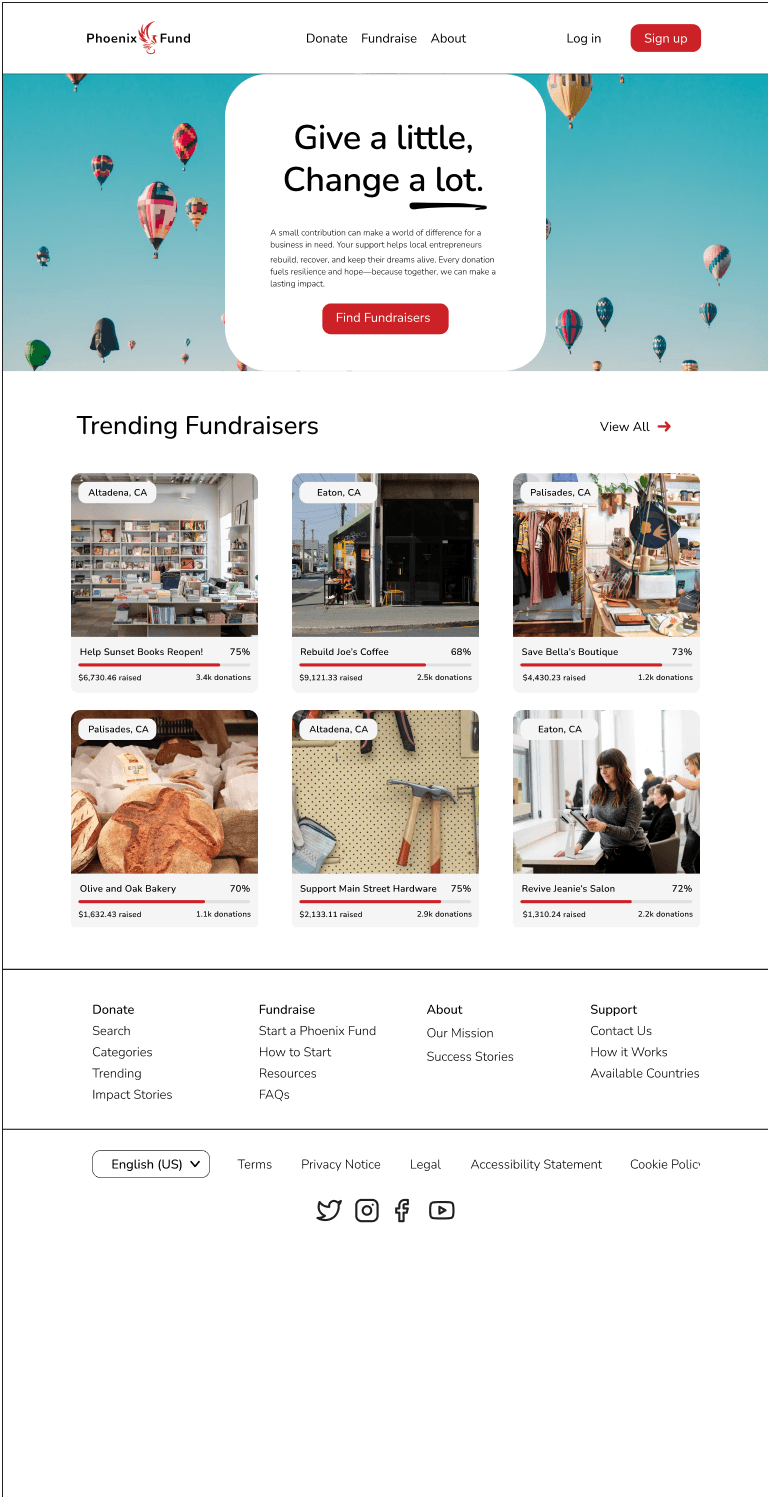
New search functionality allows users to quickly find fundraisers by name or category, making it easier to discover and support relevant businesses.

After Usability Study
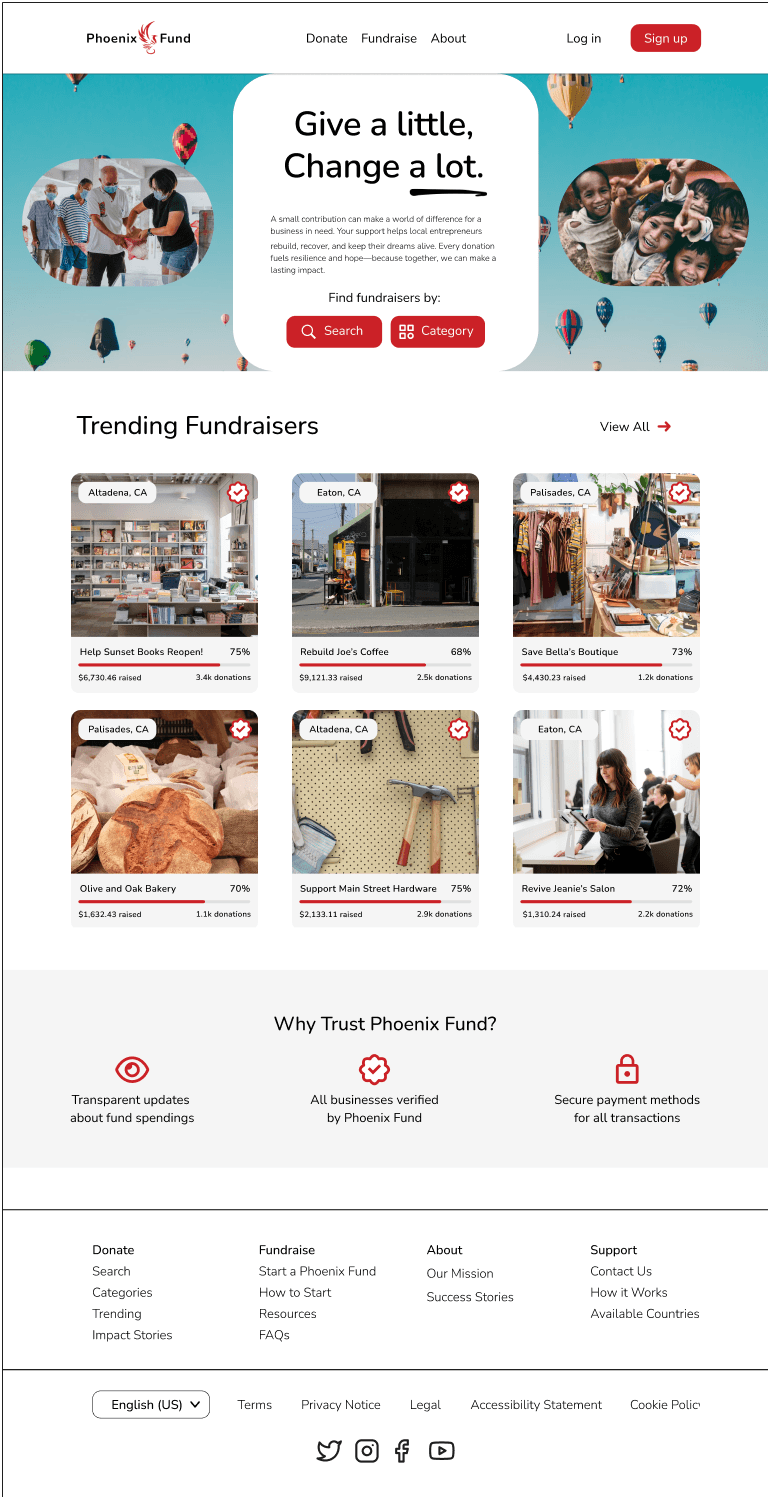
Campaign pages now feature compelling images that tell a visual story, creating an emotional connection and encouraging users to engage and donate.
Trust-building verified badges now appear on fundraiser pages, assuring donors their contributions are going to credible recipients.
Hi-Fidelity Mockups
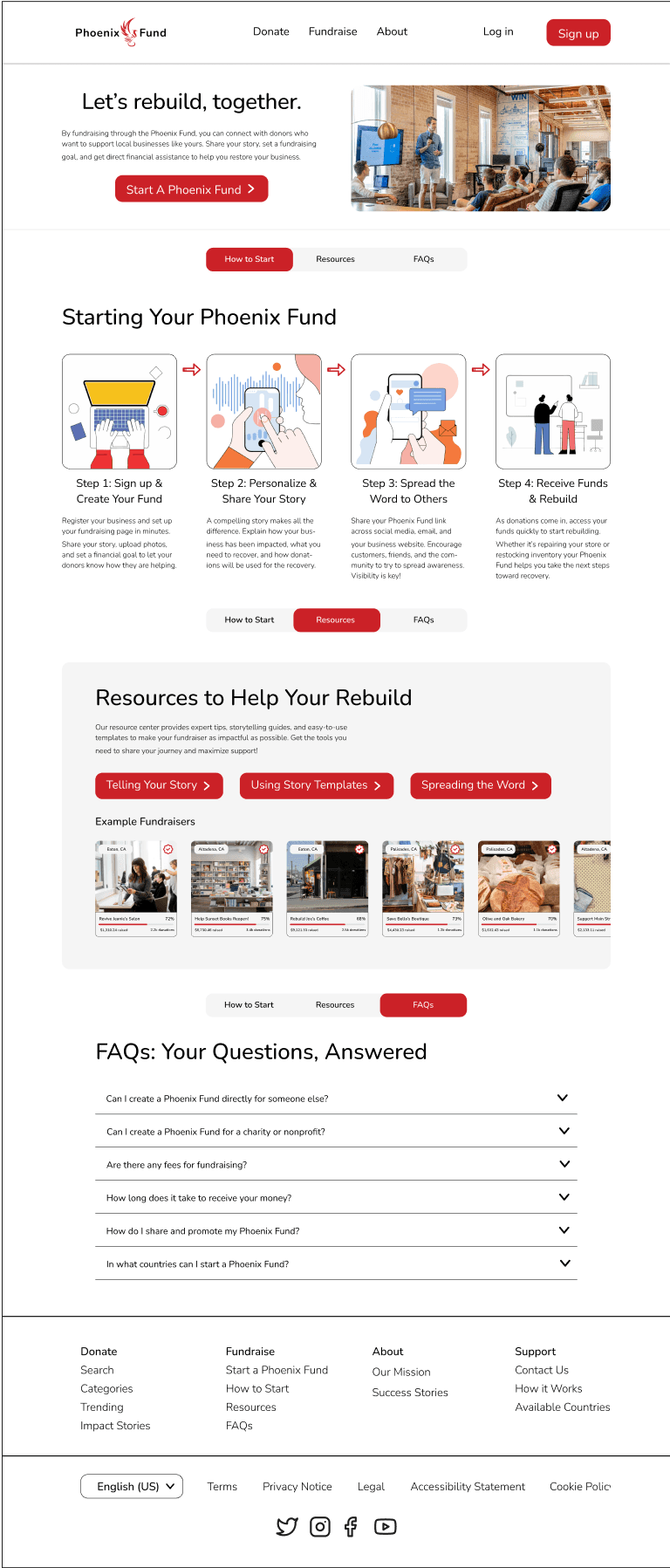
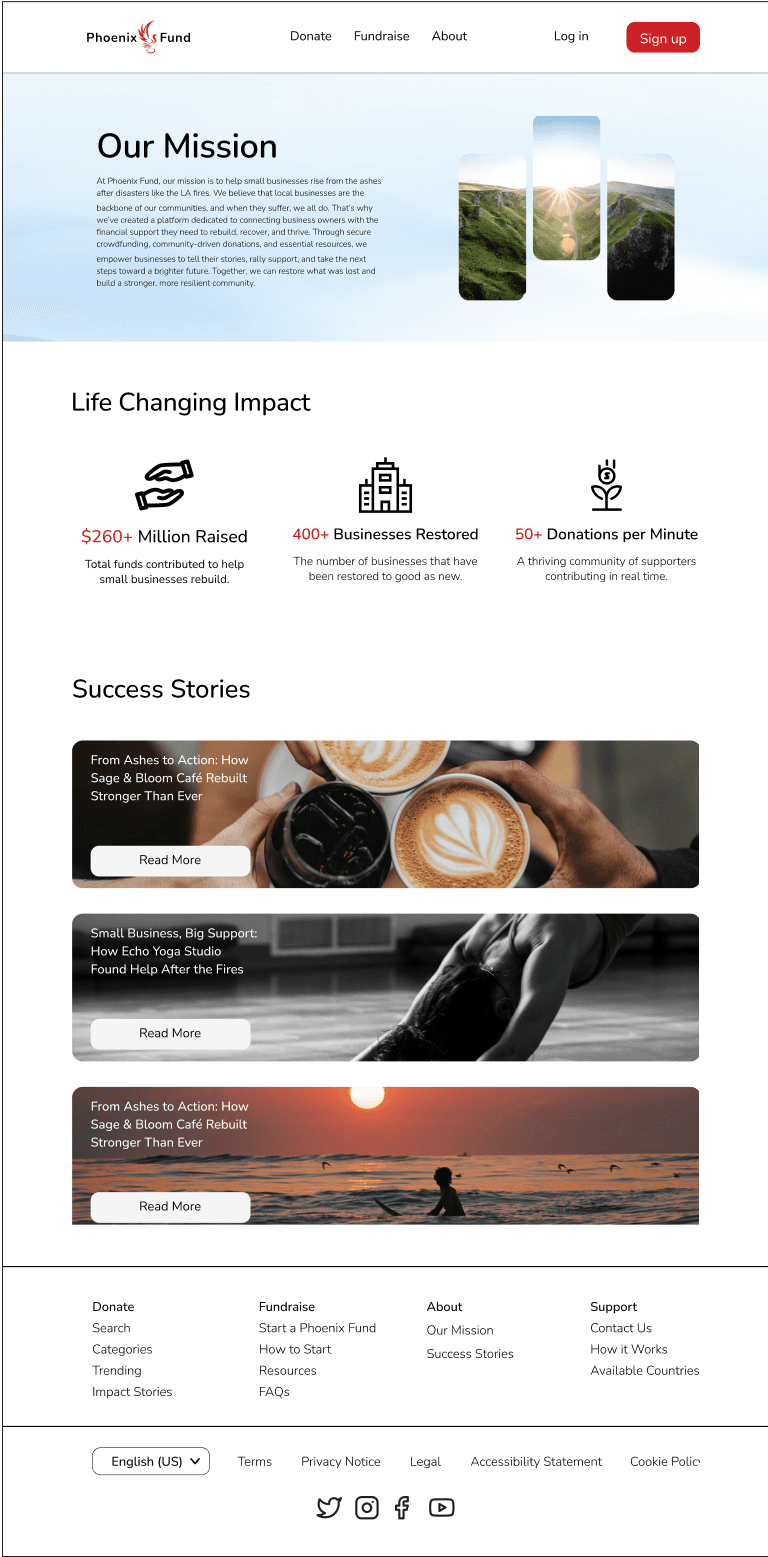
Hi-Fi Prototype
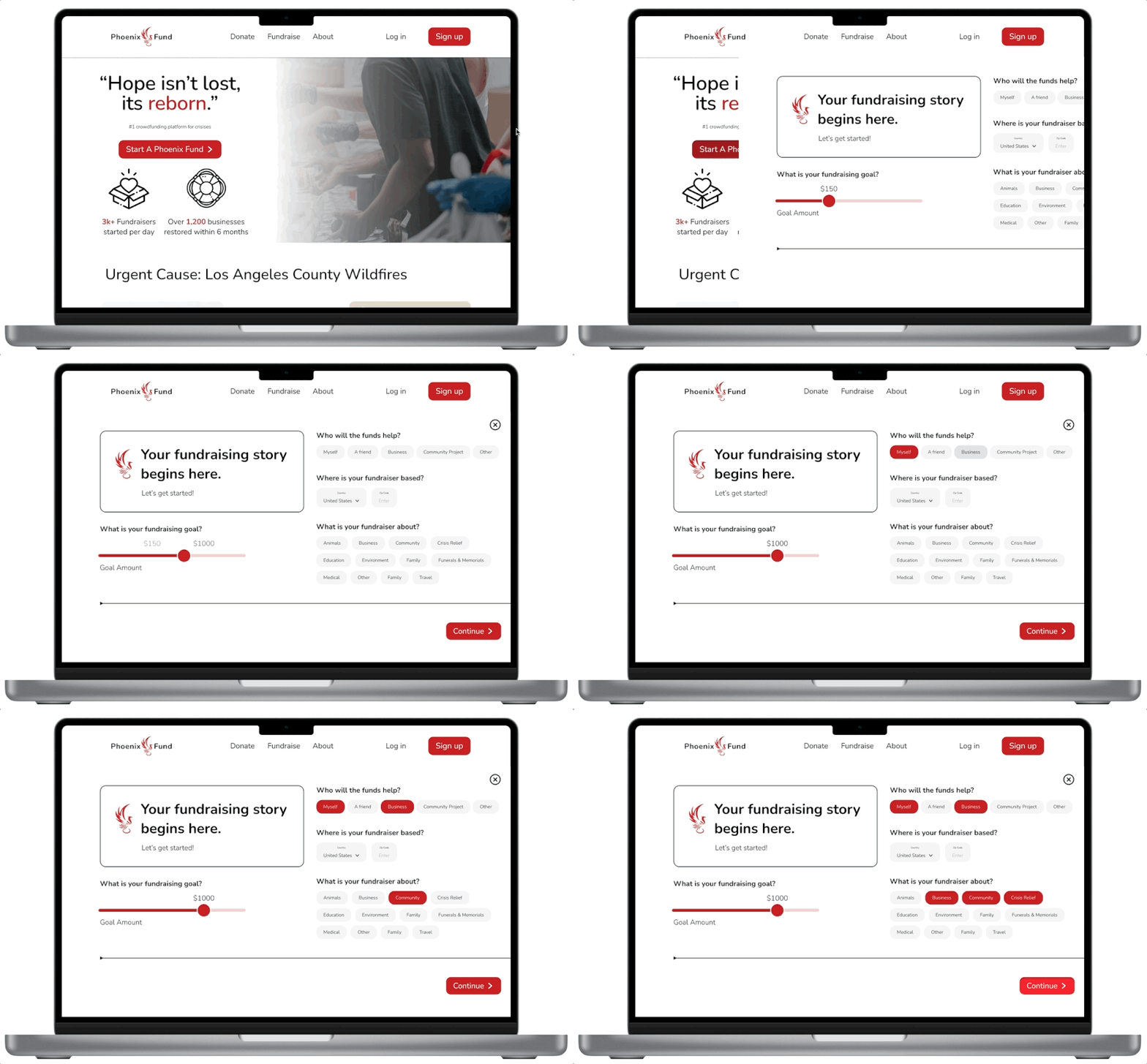
Prominent Call-to-Action
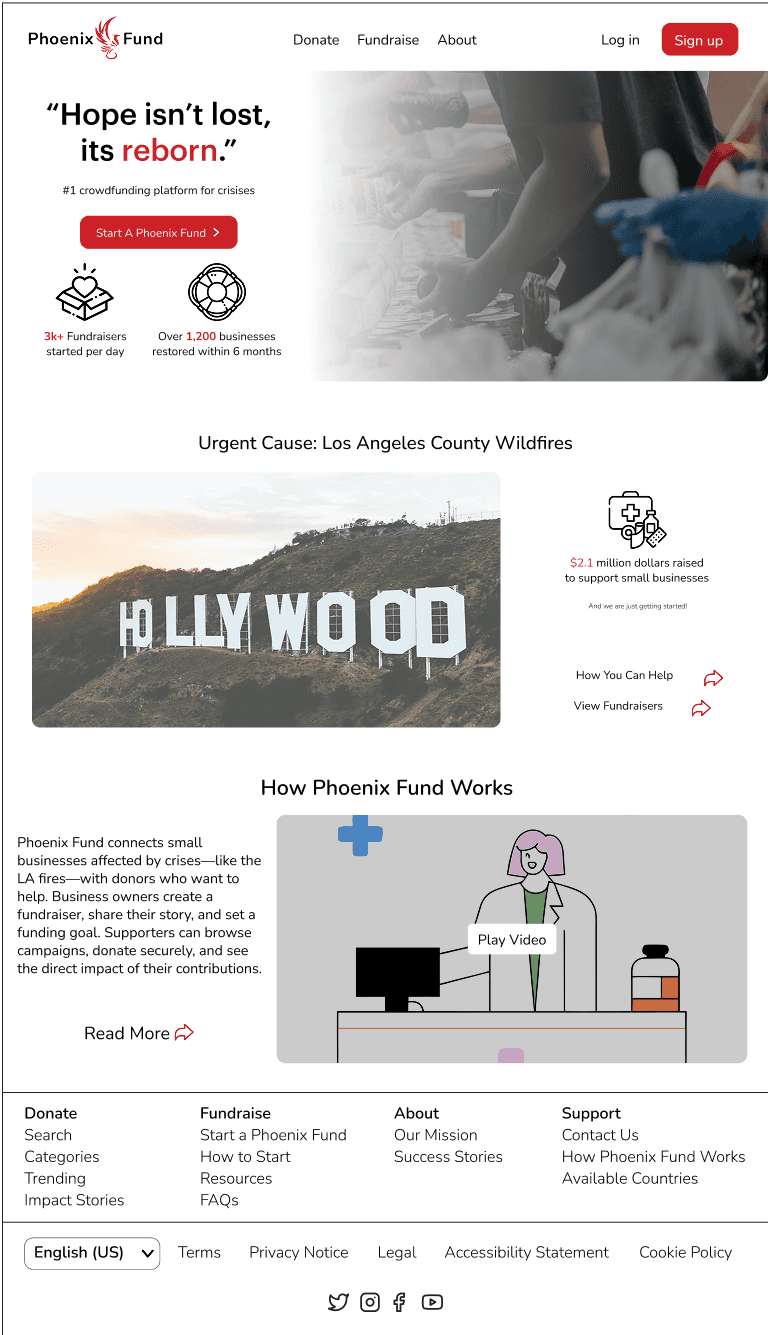
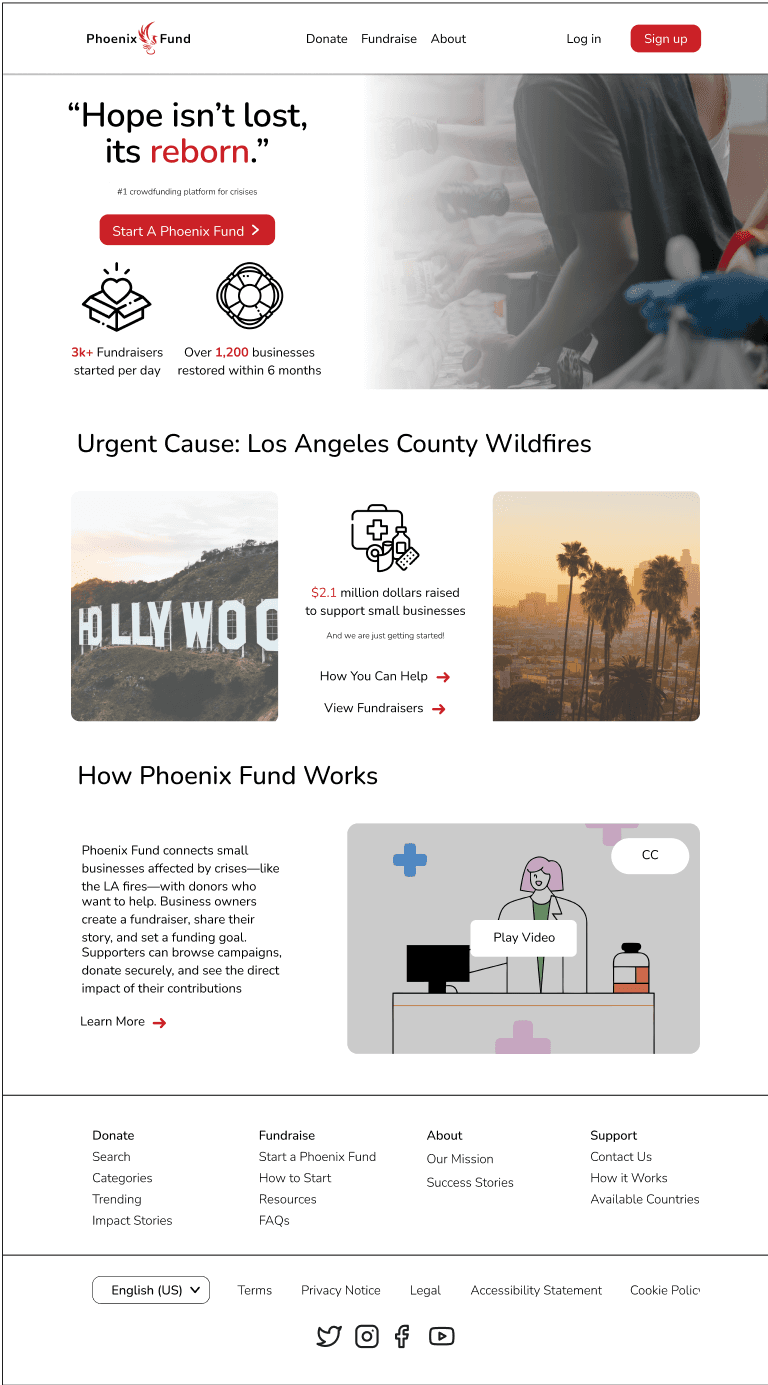
By placing a prominent "Start a Phoenix Fund" CTA on the landing page, any confusion about where a business owner should go to start fundraising is now removed. Minimizing decision fatigue ensures the users’ experience is intuitive, boosting engagement and satisfaction.
Guiding Users Through Storytelling
By prompting users to specify who the fundraiser is for, a location, and its category, users are able to frame their story in a way that resonates with potential donors.These structured inputs simplify storytelling for business owners who may not know where to start, ensuring that every fundraiser is clear, compelling, and searchable.
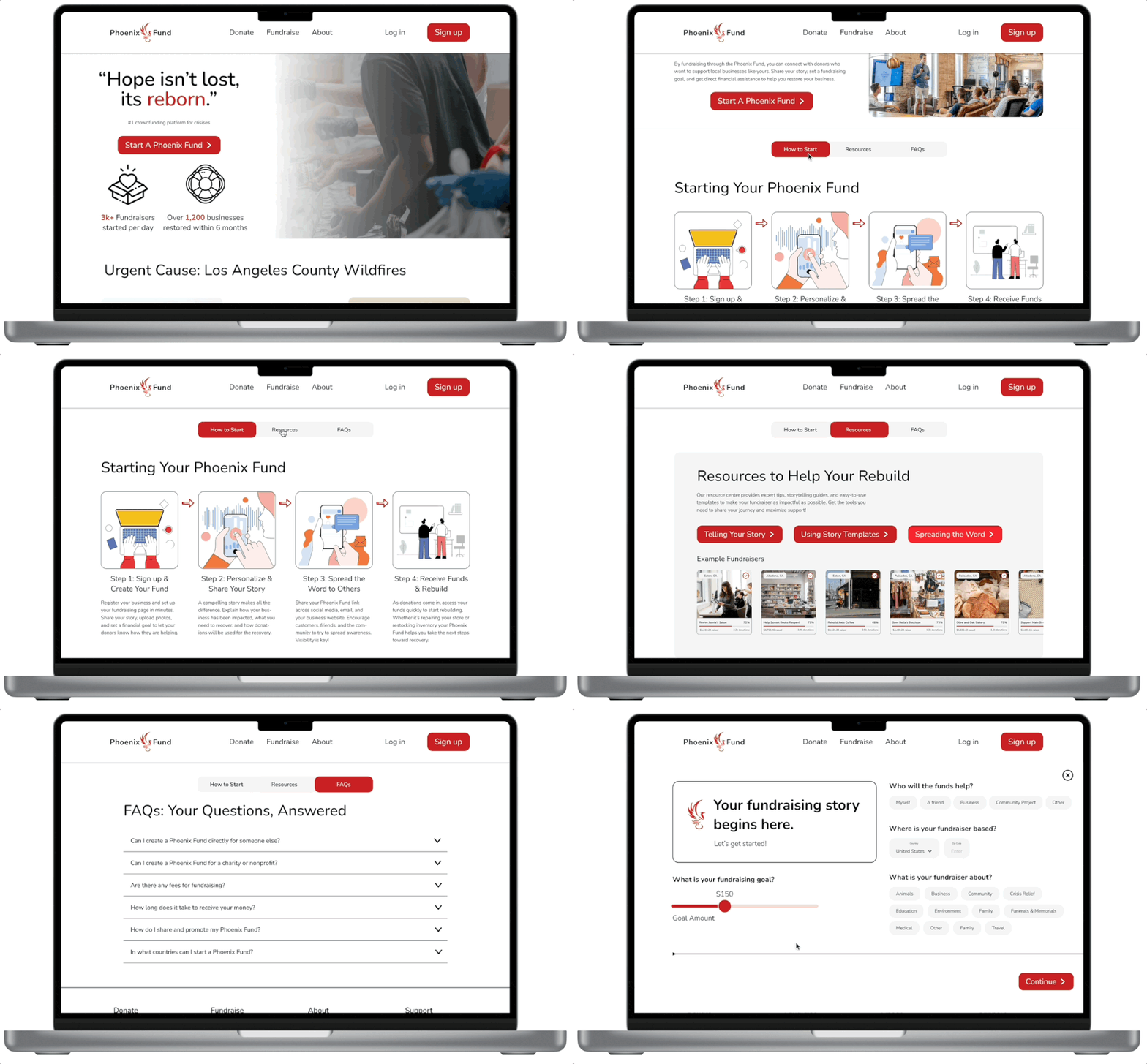
Crafting a Compelling Story
Providing resources such as story templates, storytelling guidance, and sharing tips helps businesses effectively communicate their needs. A well-told story is not only engaging but increases donor trust, making it more likely that fundraisers will be able to reach their goals.
Removing Pain Points
Many small business owners may not be familiar with online fundraising. A clear, step-by-step guide simplifies the process, making it stress-free to start a Phoenix Fund. Businesses can quickly launch a fundraiser without frustration, leading to faster financial support gained.
Results
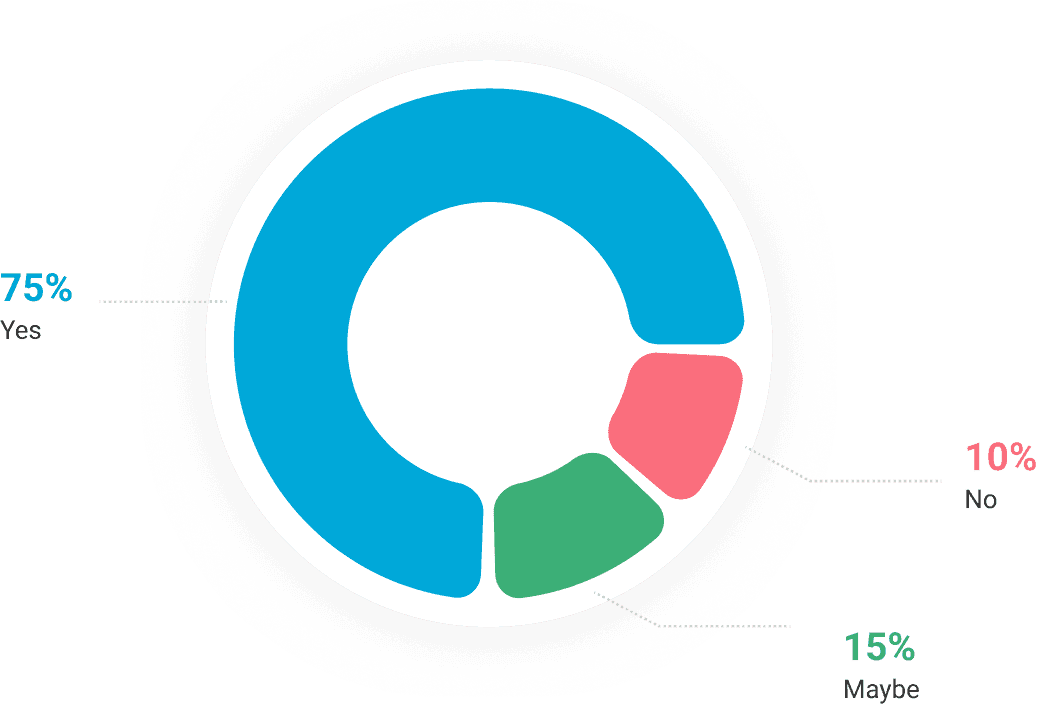
75% of users reported they would be more likely to donate while using Phoenix Fund.
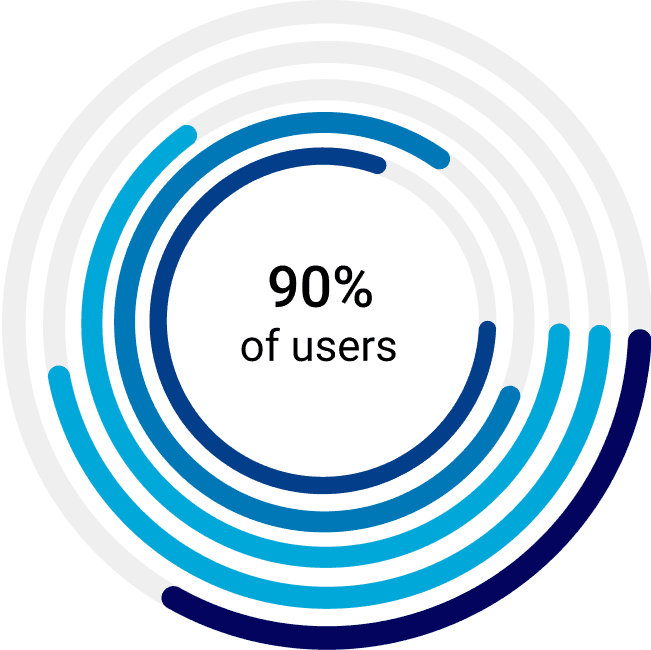
90% of users reported a high ease of use rate while using the Phoenix Fund website.
Key Performance Indicators
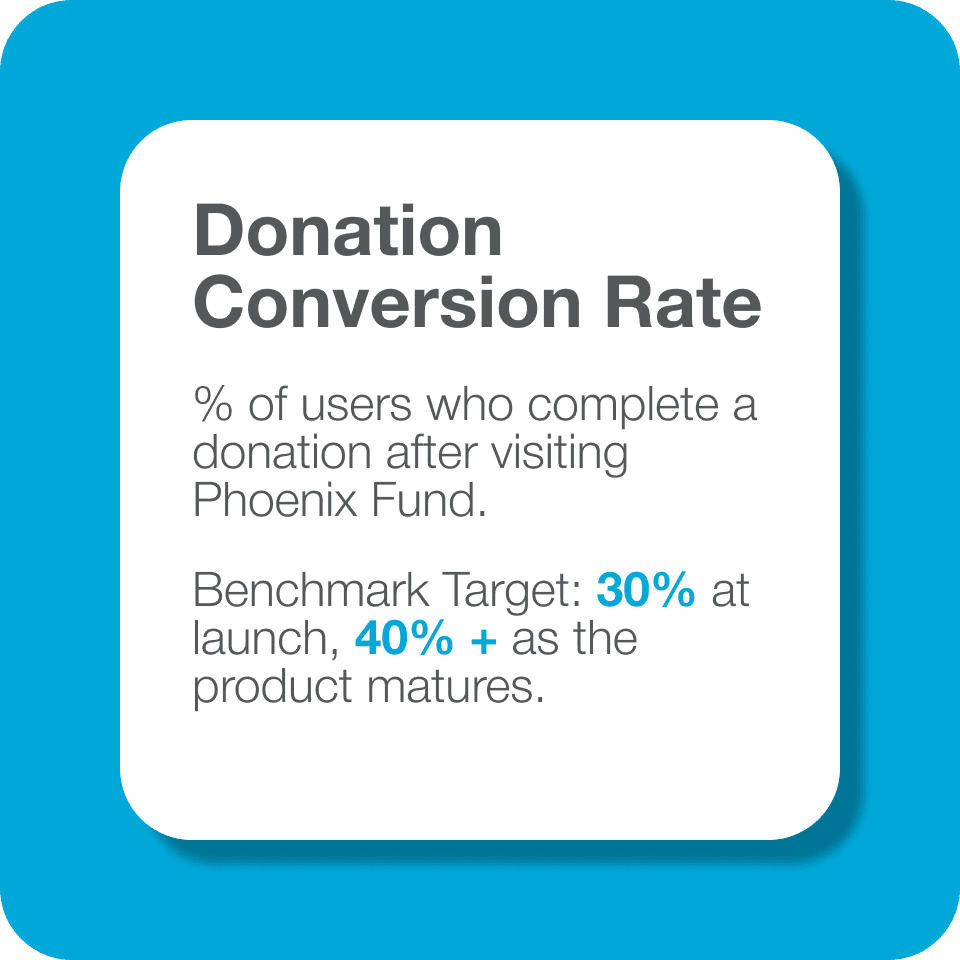
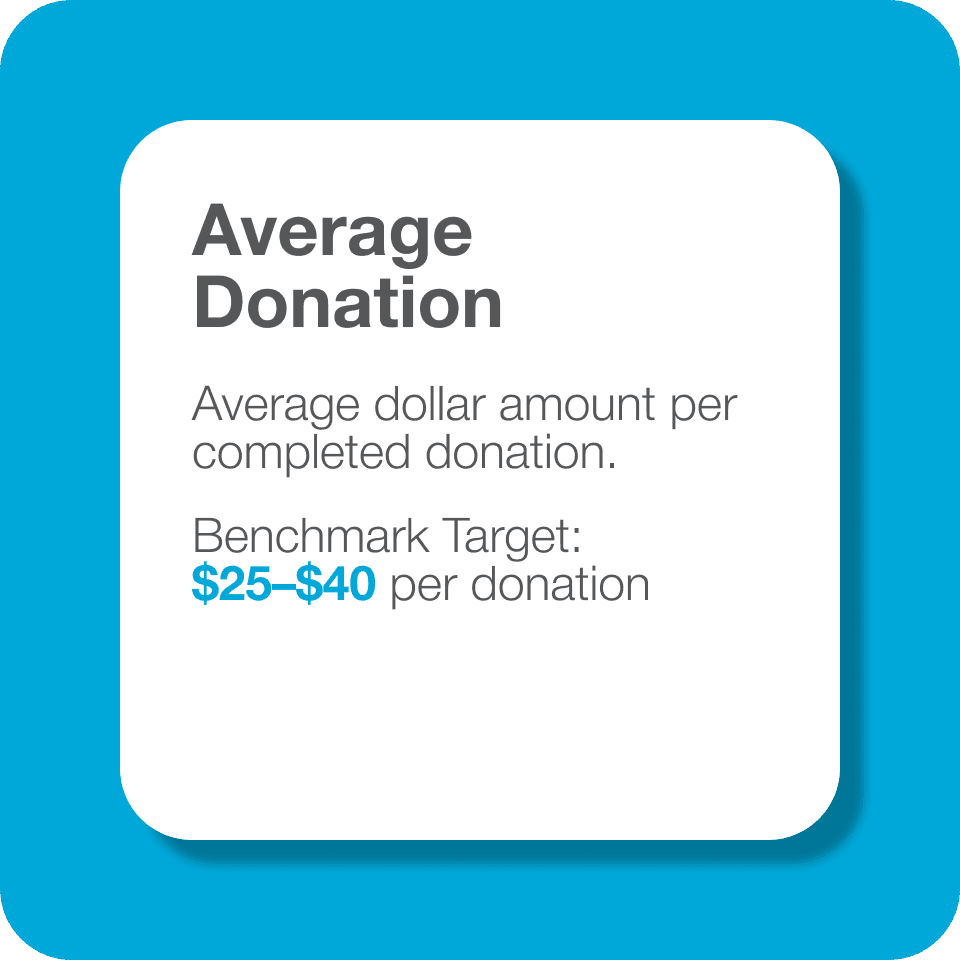
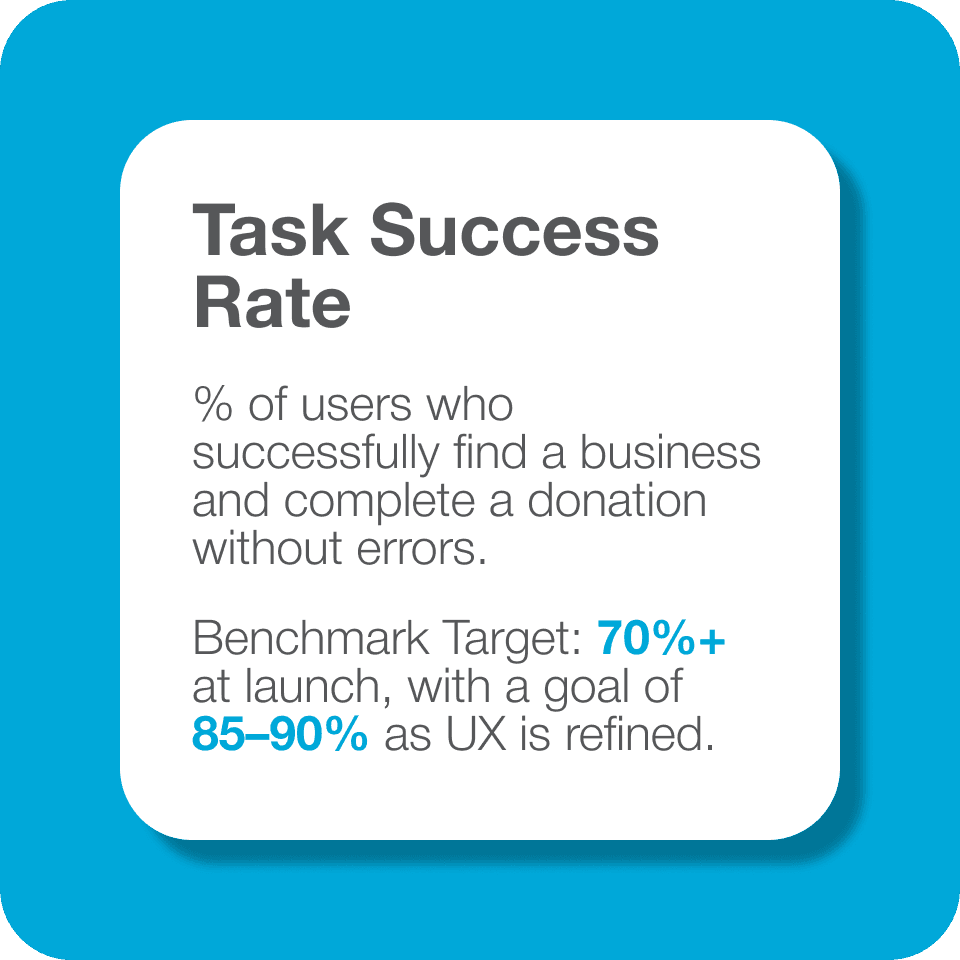
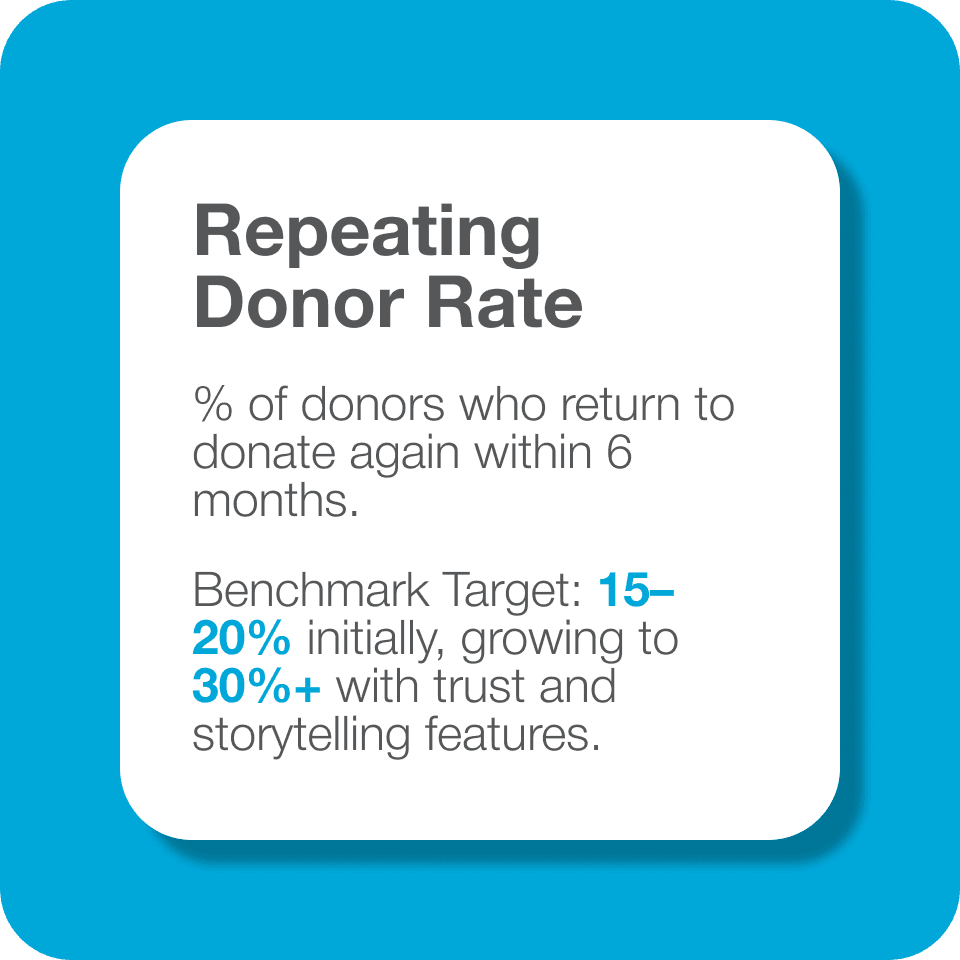
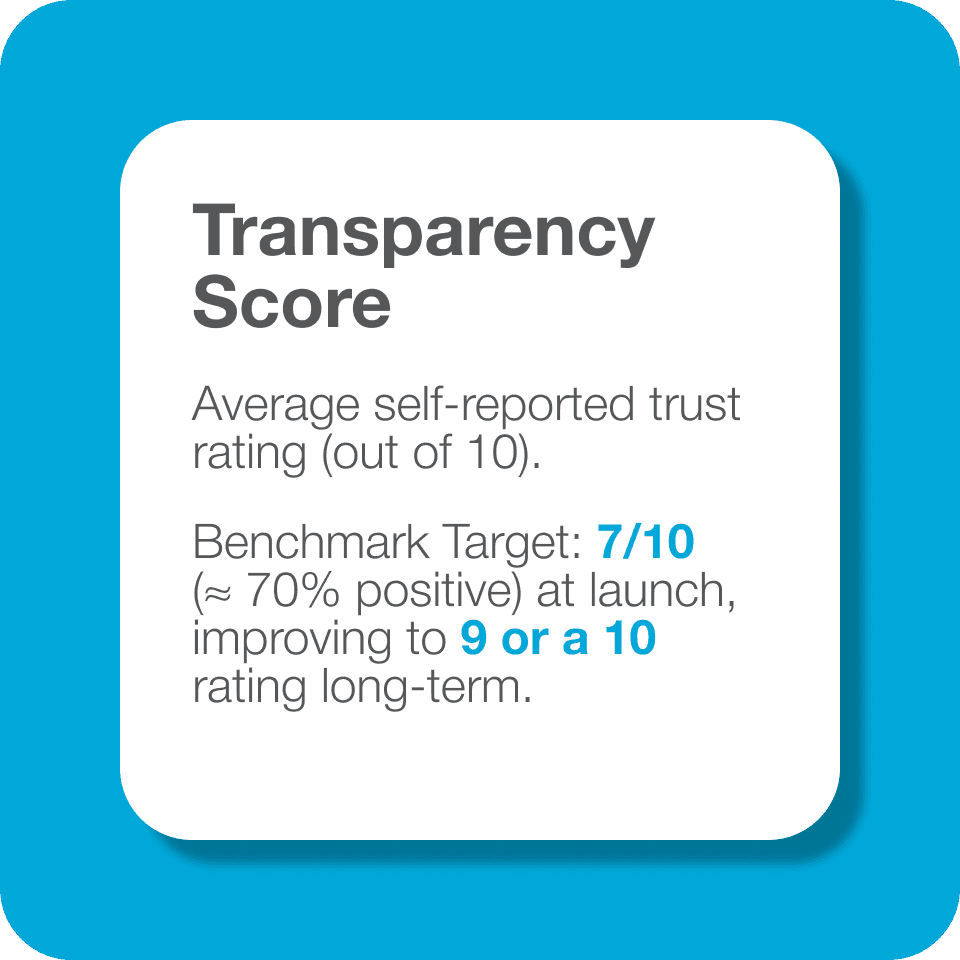
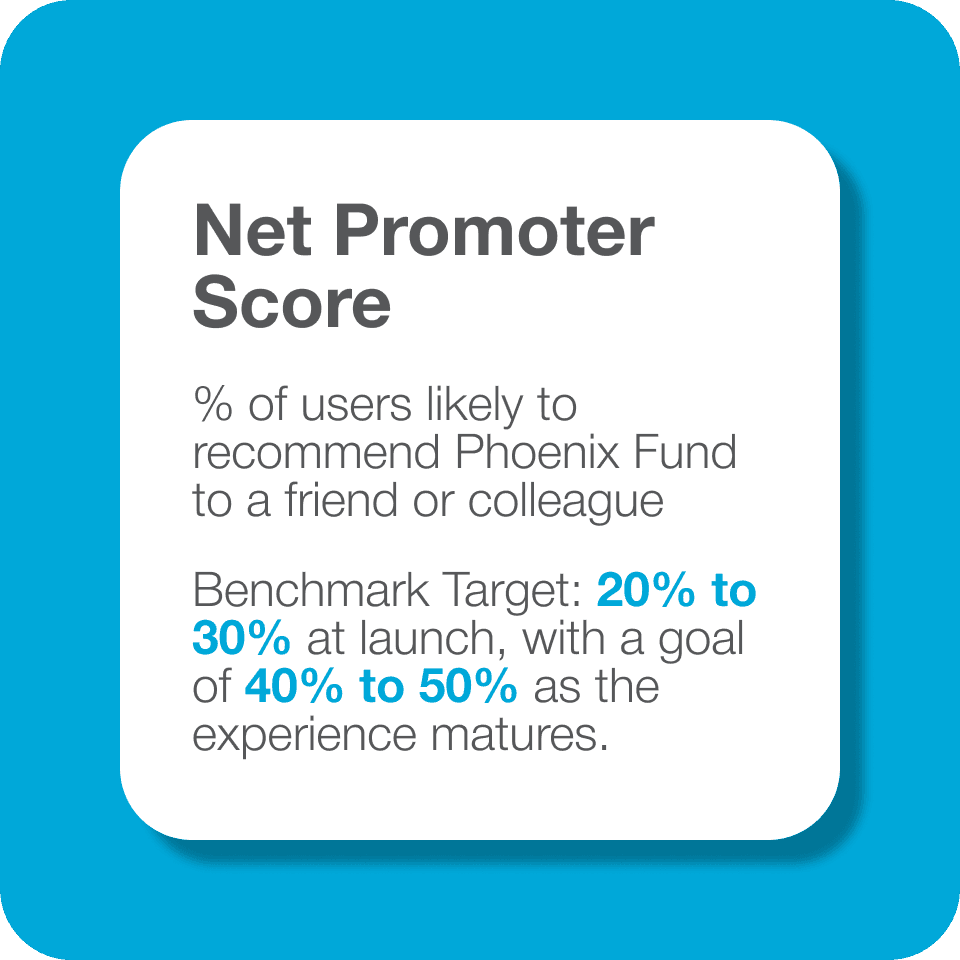
To measure whether Phoenix Fund is effectively bridging small businesses in crisis with their communities, I defined 6 primary KPIs I would measure. These metrics reflect not only the platform’s financial impact, but also its usability, trustworthiness, and ability to drive long-term recovery.
Future Steps
Working on Phoenix Fund gave me valuable lessons about designing for impact while balancing user needs with product goals. This project pushed me to think more critically as a product designer, and moving forward I see three main areas to grow:
Test Earlier, and Often
I learned that waiting too long to test slowed me down. Next time, I’d run usability tests earlier to catch issues in the donation flow before they grow bigger.
Design for Trust
I realized how critical transparency is for donors. In future versions, I’d add progress updates and more impact stories to make people feel confident their support is making a difference.
Think Beyond One-Time Donations
The product life goes way beyond just the launch, and I saw the potential to keep communities engaged long-term. Next time, I’d explore features like recurring donations or community updates to build lasting support.